

ICEYE – What does the Polish-Finnish satellite company do and why is it worth watching?
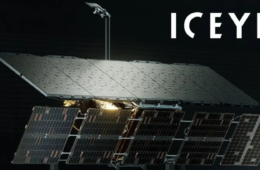
ICEYE Oy is a Finnish-headquartered, Polish-co-founded private deep-tech company that builds and operates satellites using synthetic aperture radar, or SAR. SAR satellites observe Earth with radar rather than ordinary cameras, which means they can collect images at night and through clouds. That makes ICEYE relevant to Earth observation, defence, disaster response, insurance, infrastructure monitoring, and national security. (iceye.com)
For a beginner investor interested in Polish technology, space, defence, or dual-use companies, ICEYE is interesting because it connects several major themes at once: satellite data, European technological sovereignty, AI-driven analysis, defence procurement, and Poland’s ambition to build stronger space capabilities. Poland’s Ministry of National Defence signed a MikroSAR contract with a consortium including ICEYE Polska in 2025, and BGK’s Vinci fund later announced an investment of more than PLN 40 million in ICEYE. (Gov.pl)
This article is not a valuation and not a recommendation. It is a first map of the company, the market problem, the business model, and the questions worth asking before any deeper investment analysis.
1. Why is this market worth examining?
Concise answer: Earth observation is becoming strategically important because governments, insurers, emergency services, and defence institutions increasingly need fast, reliable information about what is happening on the ground.
The space sector is no longer only about rockets, astronauts, and scientific missions. A growing part of the market is about data. Satellites help observe borders, floods, ports, forests, crops, ships, military activity, infrastructure, and climate-related risks.
Earth observation means collecting information about Earth from satellites or aircraft. Satellite data is the raw or processed information produced by those sensors. New Space refers to a newer generation of space companies that use smaller satellites, faster development cycles, private capital, and commercial business models instead of relying only on large state-led space programmes.
The broader space economy is expanding. The Space Foundation’s The Space Report 2025 Q2, covering 2024 data, estimated the global space economy at $613 billion in 2024, with commercial activity representing 78% of the total. The same report described Earth-observation satellites as increasingly relevant to disaster response and predictive capabilities. (Space Foundation)
The European context also matters. The European Commission’s EU Space Strategy for Security and Defence states that space has become a strategic domain and links space systems to security, defence, resilience, and technological sovereignty. (Defence Industry and Space)
| Type of statement | What we know |
|---|---|
| Verified facts | ICEYE builds and operates SAR satellites; Poland signed the MikroSAR contract with a consortium including ICEYE Polska; BGK’s Vinci fund announced a PLN 40m+ investment. (iceye.com) |
| Expert or institutional view | EU institutions treat space as a security and defence domain, not only a commercial sector. (Defence Industry and Space) |
| Forecast | Novaspace, cited by Reuters, projected the global Earth observation market to exceed $8 billion by 2033, up from about $5 billion at the time of the report. This is a forecast, not a guaranteed outcome. (Reuters) |
| Author’s conclusion | ICEYE is worth examining because it operates where commercial satellite data, defence needs, and European sovereignty concerns overlap. |
2. What problem does ICEYE solve?
Concise answer: ICEYE addresses the problem of seeing and understanding Earth reliably when normal satellite images are blocked by darkness, clouds, smoke, rain, or time delays.
Traditional optical satellites are like very powerful cameras in space. They can produce intuitive, photo-like images, but they depend on light and can be limited by cloud cover, fog, smoke, or night-time conditions. That is a serious problem when the customer needs information quickly.
A defence agency may need to monitor a border. An emergency service may need to map a flood during a storm. An insurer may need to estimate damage after a hurricane. A government may need independent access to imagery without waiting for another country’s satellite system.
SAR solves part of this problem because it is an active sensor. Instead of waiting for sunlight, SAR sends out microwave pulses and measures the reflections. NASA explains that SAR can create high-resolution imagery day or night and regardless of weather conditions, while ESA notes that clouds, fog, and precipitation have little effect on microwave-based radar imaging. (NASA Earthdata)
The customer problem is not simply “getting a satellite image.” The real problem is getting timely, reliable, actionable information when decisions are expensive, urgent, or security-sensitive.
3. What does ICEYE do?
Concise answer: ICEYE designs, builds, launches, operates, and sells access to small SAR satellite systems and data products.
ICEYE Oy was co-founded by Rafał Modrzewski and Pekka Laurila as a project in 2012 and as a company in 2014. ICEYE is headquartered in Finland and operates globally, including in Poland. (iceye.com)
ICEYE’s main capability is a constellation of SAR satellites. A constellation is a group of satellites working together so that the same place on Earth can be revisited more often. In Earth observation, revisit frequency matters because a customer may need to know what changed in the last hour or day, not last month.
ICEYE sits across both the upstream and downstream parts of the space value chain. Upstream means building and operating space infrastructure, such as satellites and mission systems. Downstream means turning satellite data into usable services, analytics, software, and decision support.
ICEYE’s offering includes SAR data, sovereign mission systems for governments, natural-catastrophe insights, flood intelligence, and solutions for customers such as defence, intelligence, insurance, emergency management, utilities, banking, and government agencies. (iceye.com)
A mission integrator is a company that helps combine satellites, ground systems, tasking, data delivery, operations, and user workflows into a complete mission. ICEYE’s work on Poland’s MikroSAR programme is important because it shows the company acting not only as a satellite supplier, but as part of a sovereign Earth-observation system.
Maturity Stage
ICEYE should not be viewed as a laboratory-only company. Its core SAR satellite capability is already operational and commercial. Poland’s MikroSAR system was handed over to the Polish Armed Forces in 2026, less than 12 months after contract signing, according to ICEYE. (iceye.com)
A useful framework here is Technology Readiness Level, or TRL. TRL is a 1–9 scale used to assess how mature a technology is; TRL 1 is early research, while TRL 9 means the technology has been proven in operation. ESA uses this type of scale for space technologies. (Agencja Kosmiczna ESA)
ICEYE’s operational SAR constellation suggests that its core technology is well beyond prototype stage. The analysis question is therefore less “Can SAR work?” and more “Can ICEYE keep scaling production, contracts, data quality, and margins?”
Simply Put
ICEYE builds radar satellites that can see Earth at night and through clouds.
It sells satellite data, analysis, and complete satellite systems to governments and commercial customers.
The company is interesting because its technology is useful for both civilian and defence applications.
4. How does ICEYE make money?
Concise answer: ICEYE can generate revenue by selling satellite imagery, analytics, data access, disaster-intelligence products, and complete sovereign satellite systems.
The most important customer groups appear to be governments, defence institutions, emergency-management agencies, insurers, banks, utilities, and companies that need geospatial intelligence. ICEYE’s own materials describe customers in defence and intelligence, environmental monitoring, insurance, and emergency management. (General Atlantic)
There are several possible revenue models:
| Revenue model | What customer pays for | Likely character |
|---|---|---|
| SAR data access | Images or data from ICEYE satellites | Could be one-off or recurring |
| Analytics products | Flood, wildfire, hurricane, deforestation, or change-detection insights | More software/data-service-like |
| Sovereign mission systems | Dedicated satellites, ground infrastructure, training, and operational capability | Large project contracts |
| Tactical or priority tasking | Guaranteed access to satellite collection windows | Potentially recurring for defence users |
| Partnerships/resellers | Distribution or integration of ICEYE data into third-party platforms | Scalable if partner network grows |
The distinction matters. A one-time satellite delivery contract can produce large revenue but may be lumpy. A recurring data or analytics subscription can be more predictable. A complete sovereign mission system may create a long sales cycle but also a deeper relationship with the customer.
ICEYE reported unaudited 2025 revenue above €250 million, EBITDA above €100 million, and contracted backlog of €1.5 billion. Order backlog means contracted work that has not yet been recognized as revenue; it is useful, but it is not the same as cash already received or profit already earned. (iceye.com)
Scalability means the ability to grow revenue faster than costs. ICEYE’s scalability will depend on whether it can build satellites efficiently, launch them reliably, automate data processing, convert data into repeatable products, and avoid becoming purely a bespoke government-project contractor.
5. Who buys ICEYE’s products?
Concise answer: ICEYE sells to both public-sector and private-sector customers, with defence and sovereign intelligence becoming especially important.
Public-sector customers may include defence ministries, armed forces, border agencies, civil protection agencies, and national space or intelligence institutions. Poland’s MikroSAR contract is a clear example of the defence and sovereignty use case. Under that agreement, ICEYE was to provide an initial batch of three SAR satellites, with an option for three more, under a contract valued at approximately €200 million. (iceye.com)
Private-sector customers may include insurers, reinsurers, banks, infrastructure operators, energy companies, logistics companies, and geospatial analytics firms. For example, satellite-based flood information can help insurers estimate damage more quickly after a disaster, while banks may use natural-catastrophe intelligence to understand credit exposure in affected areas.
This is a dual-use technology. Dual-use means the same capability can serve civilian and military purposes. SAR imagery can support flood response and forest monitoring, but it can also support reconnaissance and intelligence.
6. What Could Become ICEYE’s competitive advantage?
Concise answer: ICEYE’s potential advantage lies in combining operational SAR satellites, frequent revisit times, sovereign mission delivery, and data products that customers can use quickly.
The first possible advantage is technical. SAR works in conditions where optical imagery can struggle. That is not unique to ICEYE, but ICEYE has built a large operational SAR constellation and markets high-revisit, high-resolution monitoring as a core capability. (iceye.com)
The second possible advantage is speed of deployment. ICEYE says Poland’s MikroSAR system was delivered in under 12 months, with Polish operators trained and running the system independently. If repeatable, that speed could matter for governments that do not want decade-long space procurement programmes. (iceye.com)
The third possible advantage is vertical integration. A vertically integrated space company controls more of the chain: satellite design, manufacturing, operations, data access, analytics, and customer delivery. General Atlantic described ICEYE as operating a vertically integrated platform in its 2026 funding announcement. (General Atlantic)
The fourth possible advantage is strategic positioning. ICEYE is European, Polish-Finnish in origin, and relevant to NATO and EU defence priorities. For Poland, ICEYE is also symbolically important because it shows how Polish engineering talent can be connected to a globally relevant space company.
The key question is whether these advantages are durable. Intellectual property means legally protected know-how, designs, software, patents, and trade secrets. In ICEYE’s case, investors should examine not only patents, but also manufacturing know-how, radar-processing algorithms, customer relationships, security clearances, and operational data infrastructure.
7. What could drive future growth?
Concise answer: Growth could be driven by demand for sovereign intelligence, defence spending, climate-risk monitoring, insurance analytics, and AI-enabled Earth-observation services.
Several trends support the case for deeper analysis.
First, governments increasingly want independent access to satellite intelligence. The EU Space Strategy for Security and Defence explicitly links space to security, defence, autonomy, and resilience. (Defence Industry and Space)
Second, Earth observation is becoming more valuable when paired with AI. AI can help detect ships, vehicles, floods, deforestation, damaged buildings, or suspicious changes across very large datasets. The business value may come not from raw images alone, but from turning images into alerts and decisions.
Third, climate-related risks create demand for better monitoring. Floods, wildfires, hurricanes, and coastal risks affect governments, insurers, banks, utilities, and emergency services. ICEYE already positions natural-catastrophe intelligence as part of its product portfolio. (iceye.com)
Fourth, capital availability may help the company scale. In June 2026, ICEYE announced a €450 million primary Series F funding round led by General Atlantic, with the broader transaction exceeding €1 billion and valuing the company at more than €10 billion. The same announcement said production was moving from 50 satellites per year toward a target of 100 per year by 2028. (General Atlantic)
These are growth drivers, not guarantees. Industry growth only benefits ICEYE if the company wins contracts, delivers reliably, protects margins, and keeps its technology competitive.
8. What are the main risks and unknowns?
Concise answer: The main risks are execution, customer concentration, government procurement cycles, competition, regulation, cybersecurity, launch dependency, and space sustainability.
ICEYE operates in an attractive but demanding market. Beginner investors should not assume that impressive technology automatically creates an attractive business.
The first risk is execution. Scaling satellite production from dozens to potentially much higher annual volumes requires supply-chain discipline, quality control, launch coordination, and skilled engineering teams.
The second risk is customer concentration. Large government contracts can be valuable, but they can also make revenue dependent on defence budgets, political priorities, procurement delays, and national-security rules.
The third risk is regulation and export controls. SAR intelligence has defence relevance, so sales may be affected by national-security approvals, data restrictions, sanctions, and alliance politics.
The fourth risk is cybersecurity. A company delivering sovereign intelligence must protect satellites, ground systems, data links, customer portals, and analytics infrastructure.
The fifth risk is orbital sustainability. ESA’s Space Environment Report 2025 warns that space debris continues to rise, with about 40,000 tracked objects in orbit and more than 1.2 million estimated debris objects larger than 1 cm. More satellites can create more collision-management complexity. (Agencja Kosmiczna ESA)
The sixth risk is competition. ICEYE competes not only with other SAR satellite companies, but also with optical satellite firms, defence primes, government-owned systems, drone-based surveillance, aerial imaging, and data analytics platforms. The important question is not simply “Who has a better satellite?” but “Who delivers the most useful intelligence at the right cost, speed, reliability, and security level?”
9. What should a beginner investor examine next?
Concise answer: The next step is to move from technology curiosity to evidence: contracts, margins, customer mix, delivery record, competitive position, and governance.
Useful questions include:
- How much of ICEYE’s revenue comes from government contracts versus commercial data products?
- Are revenue streams recurring, project-based, or dependent on a small number of large contracts?
- How profitable are sovereign satellite systems compared with data and analytics subscriptions?
- Can ICEYE scale satellite production without quality problems?
- How strong is ICEYE’s backlog, and when is it expected to convert into revenue?
- What export-control, security, or political risks could limit international sales?
- How defensible are ICEYE’s radar technology, software, analytics, and operational know-how?
- Which competitors can match ICEYE on revisit frequency, image quality, delivery speed, and sovereign-system integration?
- How dependent is ICEYE on third-party launch providers?
- Does Poland’s relationship with ICEYE create long-term industrial benefits, or mainly individual contracts?
Bottom Line
ICEYE is interesting enough to justify deeper research because it operates at the intersection of space technology, defence, climate resilience, insurance data, and European technological sovereignty. The company’s SAR satellites address a real market problem: the need to observe Earth reliably at night, through clouds, and during fast-moving events.
For a Polish technology-sector observer, ICEYE is especially relevant because of its Polish co-founder, ICEYE Polska’s role in MikroSAR, and BGK/Vinci’s investment. The deeper analysis should now focus on business quality: revenue mix, contract durability, margins, execution risk, competitive pressure, and the degree to which ICEYE can turn strategic importance into sustainable commercial performance.